

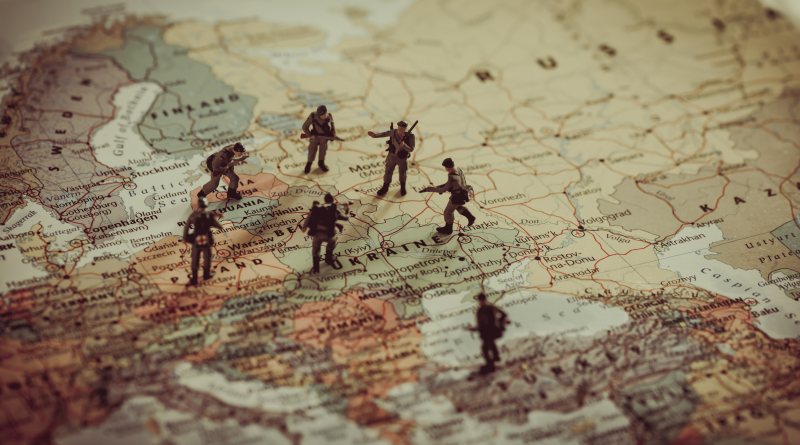
The year 2025 marks a turning point in global politics. Power balances are shifting, alliances are evolving, and emerging technologies are redefining how nations compete and cooperate. From economic realignments to environmental challenges, the geopolitical landscape of the mid-2020s reflects a world in rapid transformation — one no longer dominated by a single superpower but shaped by multiple regional forces pursuing their own agendas.
1. The Rise of Multipolar Power
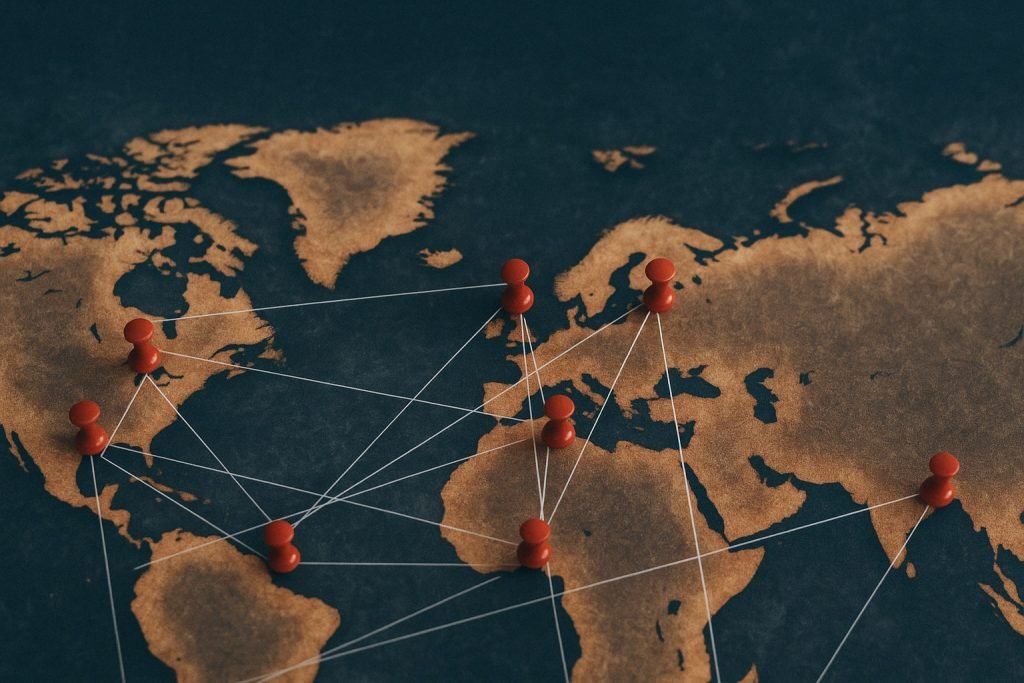
The unipolar world that emerged after the Cold War, led by the United States, has gradually given way to a multipolar system. Today, the global stage features several powerful players — the U.S., China, the European Union, India, and regional powers such as Brazil and Turkey — each influencing world affairs in distinct ways.
This diversification of power has created new opportunities and tensions. While competition drives innovation and growth, it also complicates cooperation on global issues like climate change, cybersecurity, and trade regulation. In 2025, global diplomacy increasingly relies on coalition-building and pragmatic alliances, rather than long-standing ideological blocs.
2. The U.S. and China: Competition, Not Conflict
The relationship between the United States and China remains the defining axis of 21st-century geopolitics. Though both nations have avoided direct confrontation, their rivalry extends across technology, trade, and influence in the Asia-Pacific region.
China’s Belt and Road Initiative (BRI) continues to expand its economic footprint across Asia, Africa, and parts of Europe, while the U.S. strengthens ties with countries like Japan, Australia, and India through frameworks such as the Quad Alliance.
The competition is as much about technological supremacy as it is about ideology — particularly in artificial intelligence, semiconductors, and quantum computing.
However, economic interdependence ensures that complete decoupling remains unlikely. Instead, 2025 is witnessing a careful balancing act: strategic rivalry without outright hostility, as both sides navigate the fine line between competition and coexistence.
3. Europe’s Search for Strategic Autonomy
In the aftermath of recent global disruptions — from energy crises to military conflicts — the European Union has focused on achieving greater strategic independence. This includes reducing reliance on foreign energy sources, investing in homegrown technology, and bolstering defense capabilities through closer military cooperation.
The war in Ukraine reshaped Europe’s perception of security, prompting stronger collaboration through NATO and increased defense spending across member states. Meanwhile, the EU’s green transition policies and digital regulations have positioned it as a global standard-setter on issues like data privacy, sustainability, and ethical AI development.
Europe’s challenge in 2025 lies in maintaining unity amid differing national interests, especially concerning trade with China and immigration policies. Yet, the continent’s commitment to self-reliance continues to reshape global political and economic dynamics.
4. The Middle East: Redefining Alliances
The Middle East is undergoing its own geopolitical transformation. Traditional rivalries between nations such as Saudi Arabia and Iran have softened through diplomatic normalization, while regional players are shifting focus from conflict to economic diversification and technological innovation.
The Abraham Accords and new energy partnerships are fostering cooperation between former adversaries, and Gulf states are emerging as financial and tech hubs. However, the region still faces underlying tensions, particularly regarding water scarcity, proxy conflicts, and the influence of major powers like the U.S., Russia, and China.
In 2025, the Middle East’s story is less about war and more about reconstruction, reform, and reinvention — signaling cautious optimism in a historically volatile region.
5. Global South Rising
Perhaps the most significant transformation of 2025 is the rise of the Global South — nations across Africa, Latin America, and South Asia asserting greater influence in international forums.
Countries like India, Indonesia, Brazil, and Nigeria are driving global economic growth, fueled by young populations, expanding digital economies, and renewable energy initiatives. These nations demand a greater voice in global governance, from the United Nations to climate negotiations, challenging the dominance of Western powers.
Their growing cooperation through organizations such as BRICS+ reflects a broader push toward a more inclusive world order, where economic and political influence is no longer confined to traditional powers.
6. Technology and Climate: New Arenas of Power
Beyond military and economic might, two new dimensions define global power in 2025 — technology and climate leadership. Nations leading in artificial intelligence, clean energy, and space exploration now hold strategic advantages once reserved for nuclear powers.
Climate diplomacy, in particular, has become a tool of influence. Countries investing in green infrastructure and carbon-neutral technologies are setting global standards, while laggards risk political isolation.
Conclusion
As 2025 unfolds, the world finds itself in a state of flux — decentralized, digitally driven, and deeply interconnected. The geopolitical order is no longer defined by static power blocs but by shifting alliances, emerging technologies, and shared global challenges.
In this new era of complexity, adaptability is the new strength. Nations that balance competition with cooperation, and ambition with accountability, will define the next chapter of the world’s story — a story still very much in transition.






Leave feedback about this