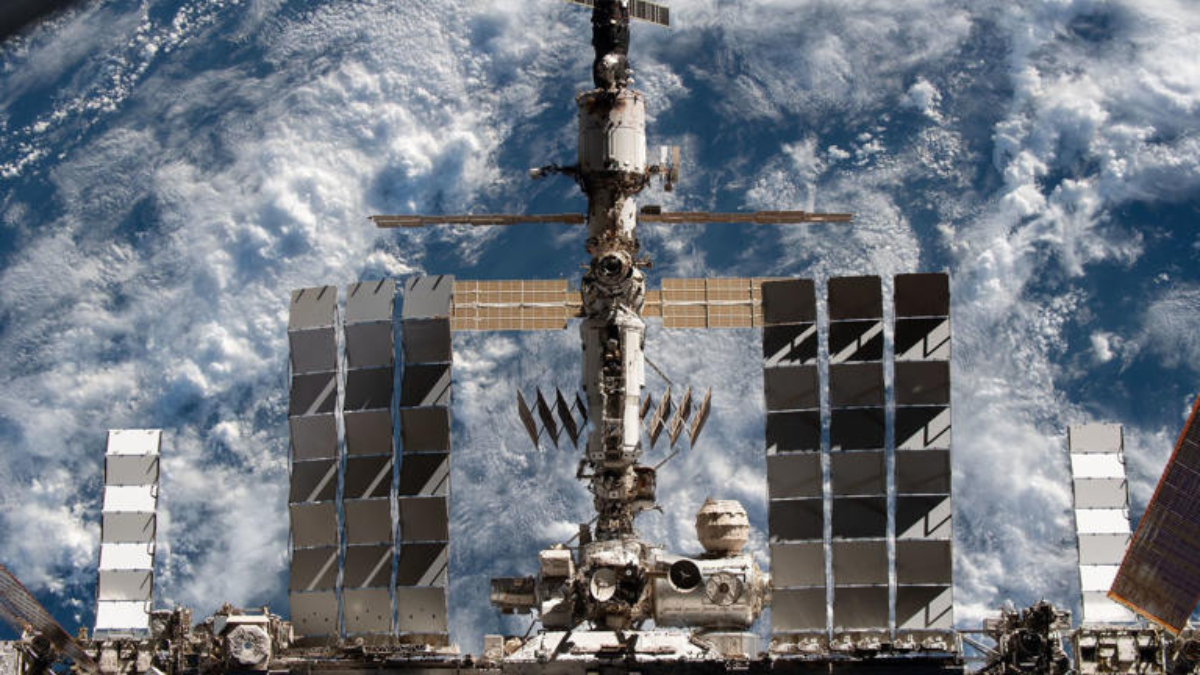
Russia’s State Space Corporation Roscosmos has unveiled its timeline for constructing an independent space station as the International Space Station approaches the end of its operational life.
Yury Borisov, head of Roscosmos, has greenlit a detailed timetable for developing the Russian Orbital Station (ROS), set to be completed by 2033. This update was announced by Roscosmos’ press office on Tuesday.
What does the approved timeline include?

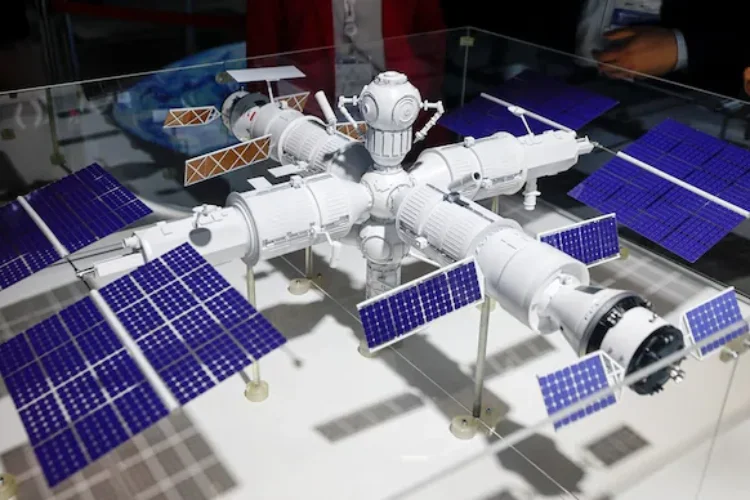
The approval timeline includes launching the first research and energy module in 2027. By 2030, the core of the orbital station will be established with the deployment of the universal nodal, gateway, and baseline modules. The project will then proceed to its second phase from 2031 to 2033, during which two specialized modules (TsM1 and TsM2) will be added to the station.
The ambitious project will cost 608.9 billion rubles (around $6.98 billion). Roscosmos has also recently signed contracts to begin research and development on the space segment of the orbital station, next-generation crewed spacecraft, and the Angara heavy-lift rocket that will support the station.
The overall timeline includes flight tests for new spacecraft, the development of launch vehicles, and the establishment of ground infrastructure. It also includes efforts by research institutes in the space industry to support the project.
The concept for the Russian Orbital Station was initially proposed in April 2021. By October of the following year, Roscosmos Chief Borisov estimated the project’s total cost at 609 billion rubles by 2032, with 150 billion rubles (approximately $1.7 billion) allocated for the first three years.
To include International Collaboration
The project is open to international collaboration, with Russia inviting African nations and BRICS member states to join in the station’s development.
The ROS is set to continue Russia’s human spaceflight program, especially as it plans to withdraw from the International Space Station (ISS) project. The new station is designed to tackle scientific, technical, economic, and security challenges that are currently limited by technological constraints and international agreements on the ISS.
Moreover, the ROS aims to enhance the competitiveness of Russian manned space systems and advance the application of cutting-edge space technologies.
This initiative represents a significant milestone for Russia as it strives to uphold its legacy in space exploration and strengthen its capabilities amid shifting global dynamics.