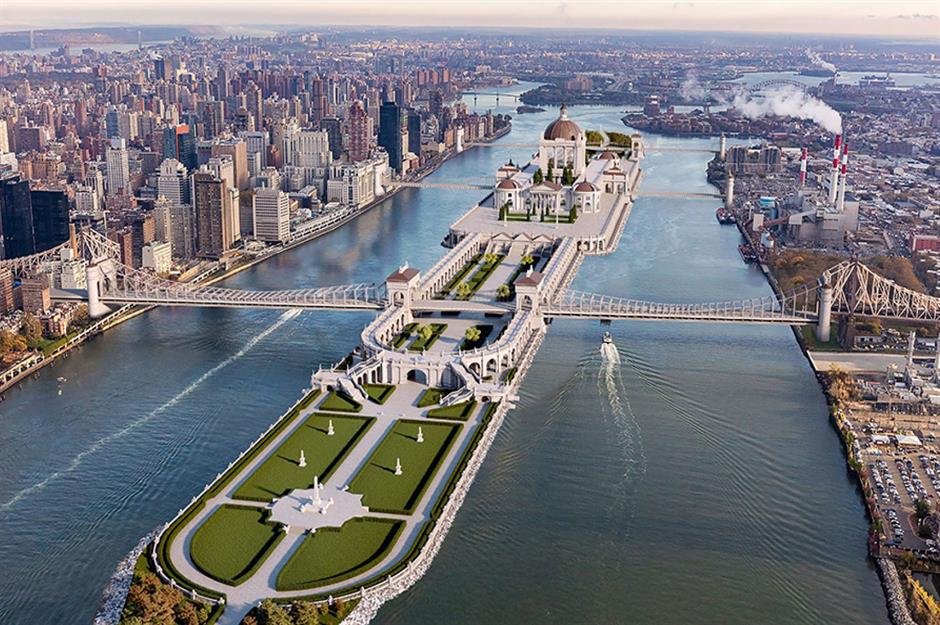
Throughout history, ambitious megaprojects have captured the imagination of engineers, investors, and the public alike. From towering skyscrapers to massive transportation networks, these undertakings promise to transform cities, economies, and the very fabric of society. However, not every grand vision comes to life. Many megaprojects—despite careful planning and vast budgets—never materialized. Here are some fascinating examples of projects that were planned but ultimately remained on paper.
1. The Illinois Central “Chicago Spire”
One of the most famous unfinished megaprojects in the U.S. was the Chicago Spire, envisioned by Spanish architect Santiago Calatrava. Planned to soar over 2,000 feet, it would have been the tallest building in the Western Hemisphere. Construction began in 2007 but halted in 2008 due to the financial crisis, leaving an empty lot where a symbol of architectural ambition was supposed to stand. The Spire remains a reminder of how economic instability can derail even the most iconic projects.
2. The Xanadu House Network
In the 1970s and 1980s, Xanadu Houses were proposed as futuristic homes incorporating automated systems, computers, and integrated technology. While a few prototypes were built, the full-scale vision of a nationwide network of smart homes never came to fruition. High costs, technological limitations, and low market adoption prevented the concept from becoming a reality, though it inspired later developments in smart home technology.
3. Tokyo Bay Land Reclamation Megacity
Japan has long experimented with land reclamation in Tokyo Bay, and in the 1980s, planners envisioned a full-scale “megacity” built on artificial islands. The project aimed to accommodate millions of residents, businesses, and government offices. While some smaller reclamation projects succeeded, the enormous megacity concept was abandoned due to astronomical costs, environmental concerns, and earthquake risk. It remains a “what could have been” in urban planning history.
4. The Florida Everglades Jetport
In the 1960s, the Everglades Jetport was planned to be the world’s largest airport, capable of handling supersonic jets and millions of passengers. The project was intended to rival major airports like JFK and O’Hare. However, environmental opposition, funding challenges, and changing air travel patterns led to its cancellation. Today, the partially built site exists as part of Everglades National Park, serving as a cautionary tale for ambitious infrastructure in sensitive ecological zones.
5. The Atlantic Crossing Bridge
Across Europe, ambitious plans for an undersea bridge or tunnel connecting Spain and Morocco emerged in the 20th century. The idea was to facilitate trade, tourism, and international cooperation. Engineering studies suggested feasibility, but the project never advanced due to immense costs, complex geopolitics, and environmental concerns. It remains a symbol of transcontinental ambition left unfulfilled.
6. Saudi Arabia’s The Tower at Jeddah (Original Design)
The Jeddah Tower, initially designed to exceed 1,000 meters, has been under construction since 2013. However, earlier iterations of the project included even more ambitious plans for a “vertical city” with integrated housing, offices, and entertainment spaces for hundreds of thousands of residents. Financial constraints, labor issues, and technical challenges forced major revisions, leaving the original vision partially unrealized.
Why Megaprojects Fail
Several factors contribute to the failure of megaprojects:
- Financial instability – Economic downturns or overestimated budgets can halt progress.
- Environmental and social opposition – Large-scale projects often clash with ecological or community concerns.
- Technological limitations – Some concepts, especially futuristic ones, are simply not feasible with available technology.
- Political or regulatory hurdles – Changing governments or laws can disrupt planning.
Lessons From Unrealized Megaprojects
Even failed megaprojects leave valuable lessons. They showcase human ambition, push the boundaries of engineering and planning, and inspire future projects. Many technological advances and urban planning strategies originate from these unrealized visions, proving that even failure can have lasting impact.

Conclusion
Megaprojects that never materialized are a testament to the scale of human imagination—and the challenges of translating vision into reality. From architectural marvels to colossal infrastructure, these projects remind us that ambition alone is not enough; financial prudence, environmental awareness, and technological feasibility are equally crucial. While we may never see the Chicago Spire or the Everglades Jetport fully realized, their stories continue to inspire engineers, architects, and dreamers around the world.