Comet G3 ATLAS (C/2024), the brightest comet in nearly two decades, is expected to reach its peak brightness later this week, generating excitement among stargazers.
But the big question remains: Will it be visible to the naked eye?
Discovered on April 5, 2024, by the Asteroid Terrestrial-impact Last Alert System (ATLAS) in Chile, Comet G3 ATLAS initially appeared faint with a magnitude of +19—about 158,000 times dimmer than the faintest stars visible to the human eye.
With an unusually large orbit, G3 ATLAS takes approximately 160,000 years to complete one full revolution around the Sun. As it approaches its perihelion on January 13, 2025, coming within 8.7 million miles of the Sun, astronomers are hopeful for a spectacular celestial display.
What do recent observations show?

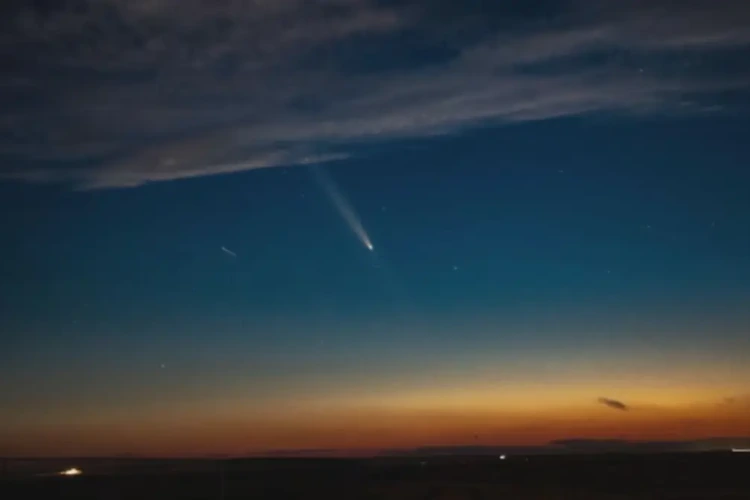
Recent observations indicate a significant increase in brightness, following an unexpected outburst on January 2, which led to a nearly fourfold surge in brightness. This sudden brightening has both excited and raised concerns among comet enthusiasts. Expert John Bortle expressed caution, noting that such instability could signal potential disintegration, although he acknowledged this behavior is common for large comets nearing perihelion.
How visible is the comet from different locations?
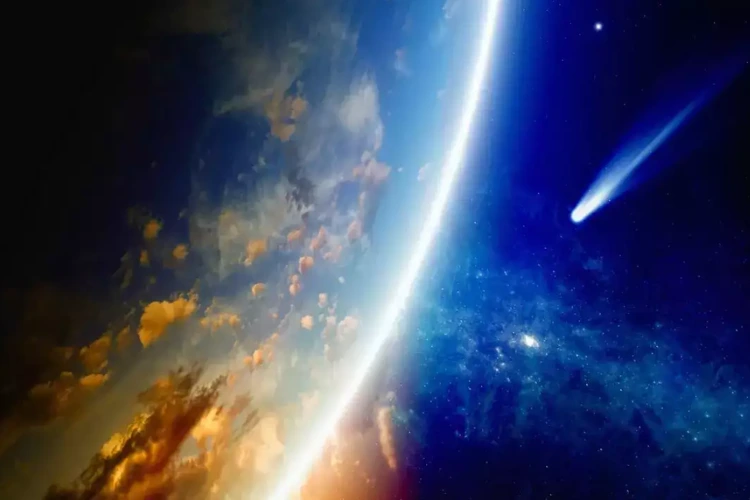
In the Northern Hemisphere, visibility has been challenging, as the comet has remained low on the southeastern horizon and often obscured by the bright morning twilight. However, with its trajectory shifting northward, northern observers now have a brief opportunity to catch a glimpse.
The best chance for viewing will be from January 12 to 14. On January 12, the comet will rise about 35 minutes before sunrise and will be positioned just above the Sun.
For optimal viewing, binoculars are recommended, and observers should scan the eastern horizon during this time.
Although predictions suggest G3 ATLAS could reach a maximum brightness of -3.2, brighter than both Jupiter and Venus, its proximity to the Sun may make visibility more difficult.
As excitement builds for this celestial event, enthusiasts are reminded that comet observations can be unpredictable but often incredibly rewarding.