In a remarkable step towards the future of personal transportation, a Texas-based business has unveiled an incredible prototype: a flying automobile powered by jet propulsion. This groundbreaking announcement has left both the automotive and aerospace industries buzzing with excitement. The potential for flying cars has long been a dream of sci-fi enthusiasts, but thanks to innovation and cutting-edge technology, that dream is rapidly becoming a reality.
The Birth of a Jet-Powered Flying Automobile
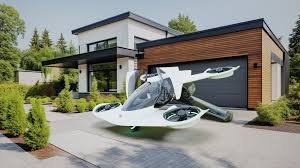
The Texas company, SkyCruiser Technologies, has made waves with its ambitious vision of transforming the way we travel. Their new flying vehicle, named the “SkyJet,” was officially unveiled at a press conference last month, showcasing a highly advanced hybrid design that blends the best features of a car and an aircraft. The SkyJet is powered by four vertical take-off and landing (VTOL) jet engines, which allow it to take off and land in tight spaces, similar to a helicopter, but with the speed and range of a small plane.
The vehicle itself is sleek and futuristic, with a streamlined body designed for both aerodynamics and style. Its carbon-fiber body ensures both lightness and strength, while its aerodynamic shape maximizes lift and efficiency. The SkyJet’s wings retract when the vehicle is on the ground, transforming it from an aircraft into a road-going automobile in a matter of seconds.
The Tech Behind the SkyJet
What sets the SkyJet apart from other flying cars currently being developed is its jet-powered propulsion system. Traditional flying car prototypes often rely on electric motors or hybrid systems, but SkyCruiser Technologies has opted for jet engines that use a combination of cutting-edge aerospace technology and sustainable fuels. The four jet engines are designed for both vertical and horizontal flight, providing the vehicle with the versatility needed for urban and rural environments alike.
The vehicle’s VTOL capabilities allow it to rise from a standstill position and land in confined spaces, making it suitable for cityscapes, where traditional takeoff and landing zones may be scarce. Additionally, the SkyJet is equipped with a sophisticated autopilot system, which uses AI and machine learning algorithms to navigate and adjust flight paths based on real-time weather data and traffic conditions.

One of the most significant features of the SkyJet is its low environmental impact. The jet engines are designed to run on a blend of sustainable aviation fuel (SAF) and hydrogen, significantly reducing emissions compared to conventional jet engines. The company is also exploring the possibility of fully electric models in the near future, which would further reduce the carbon footprint of personal air travel.
Safety Features and Regulatory Hurdles
Safety is a paramount concern when developing any new form of transportation, especially one that combines the complexities of both driving and flying. To address this, SkyCruiser Technologies has integrated a comprehensive array of safety systems into the SkyJet. These include redundant control systems, advanced collision-avoidance technology, and real-time communication with air traffic control to prevent accidents and ensure smooth operations.
However, the road to making flying cars a reality is not without its challenges. The Federal Aviation Administration (FAA) and other regulatory bodies around the world will need to establish guidelines for airspace management, vehicle certification, and pilot training. While the technology behind the SkyJet is promising, it will likely take years before such vehicles are seen regularly in the skies and on the roads.

There are also concerns about the infrastructure needed to support flying cars. New airports, landing zones, and charging stations for electric models will need to be constructed. Urban air mobility hubs will have to be developed to integrate the vehicles into existing transportation networks. Cities will also need to address questions of air traffic control, zoning laws, and the noise impact on residential areas.
The Future of Flying Cars
Despite these challenges, the unveiling of the SkyJet marks a significant milestone in the development of flying cars. With advancements in technology, environmental sustainability, and safety, flying cars are no longer confined to the pages of science fiction. As companies like SkyCruiser Technologies continue to push the boundaries of innovation, it seems likely that flying cars will become an integral part of our transportation ecosystem in the coming decades.
Though we may not yet see flying cars in our skies every day, the SkyJet is a promising glimpse into a future where the sky is the limit—quite literally. As we move forward, it’s not a question of if flying cars will be part of our world, but when. The unveiling of the SkyJet is a bold step towards that future, one where traffic jams might soon become a thing of the past, and the freedom of flight is just a push of a button away.