


Once upon a time, building software required deep programming knowledge, complex coding languages, and a team of skilled developers. But today, that’s changing faster than ever. A quiet revolution is underway — one where anyone, regardless of technical background, can bring digital ideas to life. Welcome to the era of no-code development, a movement that’s reshaping how innovation happens in the digital world.
What Is No-Code Development?
No-code development refers to software platforms that allow users to create applications without writing traditional code. Instead of typing lines of syntax, users can build with visual drag-and-drop tools, pre-built templates, and logic-based workflows. Platforms like Airtable, Webflow, Bubble, and Glide have made it possible to design, automate, and launch apps or websites simply by clicking and connecting.
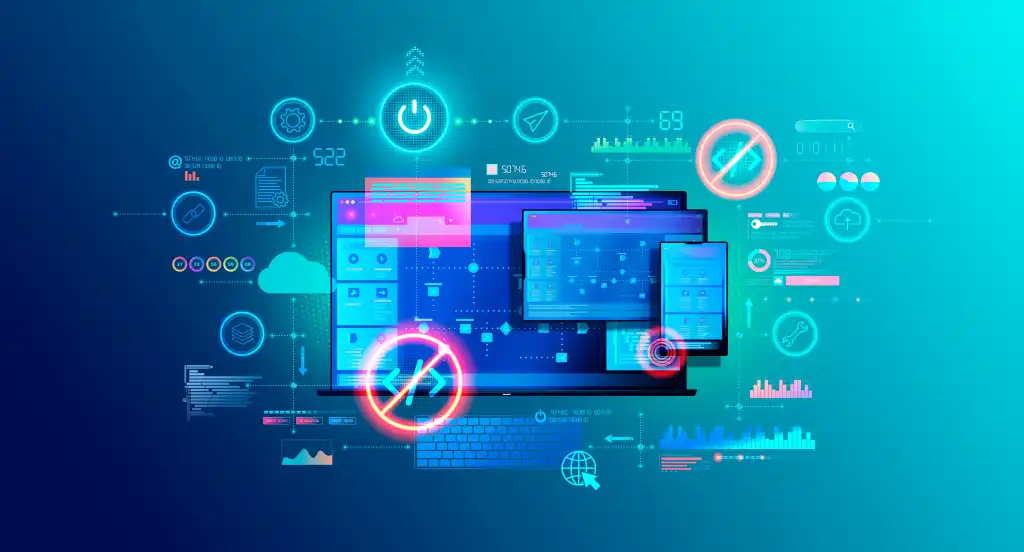
This democratization of technology means that you no longer need to be a developer to solve problems or launch products. The tools handle the technical complexity — databases, backend logic, and APIs — allowing creators to focus on what truly matters: ideas and impact.
Innovation Without Barriers
The no-code movement is breaking one of the biggest barriers in technology — accessibility. Traditionally, turning an idea into software required hiring developers or learning programming languages like Python or JavaScript. That was time-consuming, expensive, and intimidating for non-technical founders or small businesses.
No-code tools change that equation entirely. They empower entrepreneurs, designers, marketers, and educators to build digital solutions on their own terms. Want to create a booking system, a personal finance tracker, or even a full-fledged e-commerce site? With no-code, you can do it in hours instead of months.
This shift has sparked a new wave of “citizen developers” — everyday people using technology to solve local problems, improve workflows, and create value without waiting for IT departments or investors.
Speed, Flexibility, and Experimentation
In today’s fast-moving digital world, speed matters. No-code tools allow for rapid prototyping and iteration, making them perfect for startups and teams testing new ideas. Instead of spending weeks developing an MVP (Minimum Viable Product), creators can now launch, collect feedback, and refine in real time.
The flexibility of no-code platforms also means that adjustments are simple. Need to add a feature? Change a workflow? Update a layout? It can often be done instantly, without the risk of “breaking the code.” This agility encourages experimentation — a core ingredient of innovation.
In essence, no-code has turned software development into a creative playground, not a technical obstacle course.
Transforming Businesses of All Sizes
No-code isn’t just for solo creators. Across industries, companies are adopting no-code platforms to automate tasks, streamline operations, and reduce costs.
Small businesses use tools like Zapier and Notion to connect data and automate workflows, eliminating repetitive manual work. Enterprises build internal apps to manage projects, customer data, or HR systems — often without needing a full development team.
For many organizations, no-code is becoming a strategic advantage: it empowers employees to innovate from within. Instead of relying solely on IT departments, teams across marketing, finance, and operations can design tools that fit their unique needs — faster and cheaper.
Challenges and Limitations
Of course, no-code development isn’t a silver bullet. Complex applications that require high-performance computing, advanced integrations, or heavy customization may still need traditional coding. Security and scalability can also be concerns if the wrong platform is used for enterprise-grade systems.
However, the line between “no-code” and “low-code” is blurring. Many platforms now offer custom code extensions, allowing developers to add advanced functionality when needed. This hybrid approach bridges the gap — combining accessibility with technical power.
A New Wave of Digital Creativity
Perhaps the most exciting outcome of the no-code era is the cultural shift it’s creating. Technology is no longer reserved for experts — it’s becoming an everyday language of creativity. Teachers are building education apps, nonprofit leaders are launching donation platforms, and freelancers are crafting digital tools to enhance their work — all without writing a single line of code.

The result? A world where innovation is inclusive. Where ideas come to life faster, and where problem-solving becomes a shared capability across society.
The Future of Innovation Is in Everyone’s Hands
The no-code revolution is more than a trend — it’s a transformation in how we think about technology. It shifts the focus from “Who can code?” to “Who can create?” By removing technical barriers, it opens the door for millions of new innovators, dreamers, and doers.
In this new era, you don’t need a computer science degree to make a difference. You just need an idea — and the right platform to bring it to life. The future of software isn’t about code; it’s about creativity, empowerment, and accessibility for all.






Leave feedback about this